How to Clean Artificial Jewellery at Home Without Damaging It
Artificial jewellery is a beautiful and affordable way to complete your look. From stylish earrings to elegant necklaces and bracelets, these accessories are perfect for everyday wear and special occasions. However, dust, sweat, perfume, and moisture can make them lose their shine over time.
The good news is that you can keep your favourite accessories looking beautiful with a few simple household items. Learning how to clean artificial jewellery at home can help you maintain its appearance without spending money on expensive cleaning products.
In this guide, you will learn safe cleaning methods, useful tools, common mistakes to avoid, and the best ways to store artificial jewellery.
Why Does Artificial Jewellery Lose Its Shine?
Artificial jewellery may become dull or discoloured due to several reasons:
- Sweat and body oils: These can leave a layer of residue on jewellery.
- Perfume and cosmetics: Chemicals in beauty products may damage the outer coating.
- Moisture: Water and humidity can contribute to tarnishing and corrosion.
- Dust and dirt: Everyday use can reduce the shine of jewellery.
- Improper storage: KeepinArtificial jewellery may become dull or discoloured due to several reasons:
Regular, gentle cleaning helps remove surface dirt and keeps your accessories in better condition.
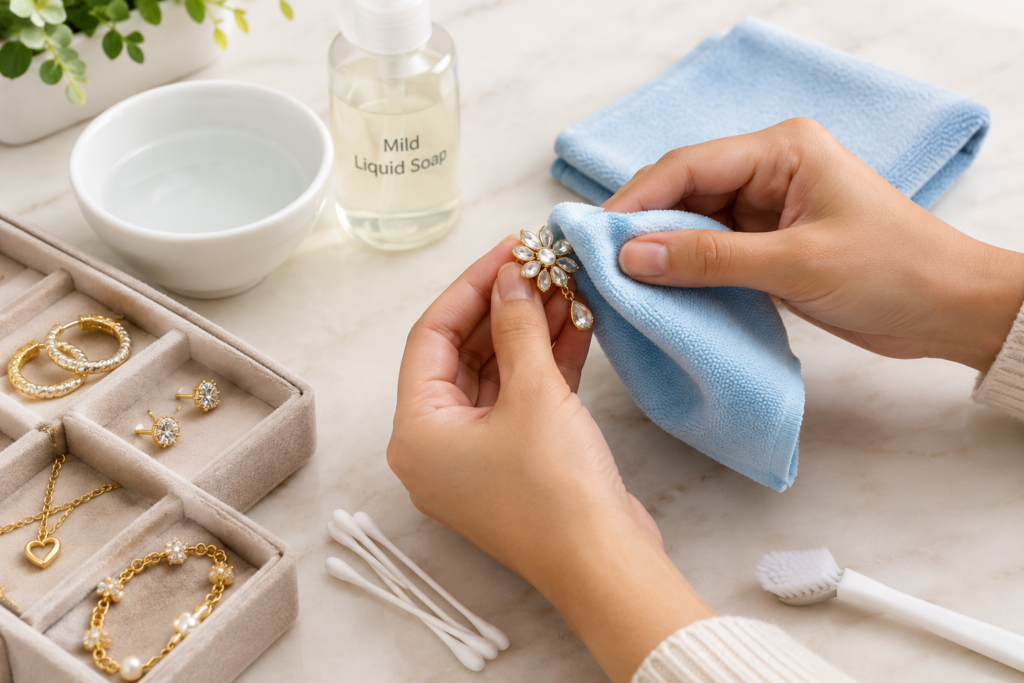
Tools Required to Clean Artificial Jewellery
2. Use Mild Soap for Suitable Jewellery
For jewellery that can tolerate gentle damp cleaning, a little mild soap may help remove surface dirt.
Steps:
- Mix a drop of mild liquid soap with lukewarm water.
- Dip a soft cloth into the solution and wring it out well.
- Gently wipe the jewellery without soaking it.
- Wipe away soap residue with a separate cloth lightly dampened with clean water.
- Immediately dry the jewellery thoroughly with a soft cloth.
Avoid this method for pieces with glued stones, delicate finishes, or water-sensitive materials. When in doubt, use a dry cloth instead.
3. Clean Small Details with a Cotton Bud
Intricate jewellery often has tiny spaces where dust collects.
Steps:
- Take a clean, dry cotton bud.
- Gently wipe around decorative details and corners.
- Avoid rubbing stones, pearls, or plated surfaces forcefully.
- Check that no cotton fibres remain on the jewellery.
This method is particularly useful for detailed earrings, pendant necklaces, and decorative bracelets
4. Remove Dust from Artificial Earrings
Earrings come into direct contact with skin and may collect sweat and cosmetic residue.
Steps:
- Hold the earrings carefully by their edges.
- Wipe the decorative surface with a soft, dry cloth.
- Clean accessible areas around the design using a cotton bud.
- Dry thoroughly before placing them in a jewellery box.
For hygiene, clean the part that contacts your ear according to the manufacturer’s material-specific care instructions. Cleaning the surface does not necessarily disinfect jewellery.
Common Mistakes to Avoid When Cleaning Artificial Jewellery
Avoid these mistakes to protect the finish of your accessories:
- Using toothpaste: Its abrasive ingredients may scratch the surface.
- Applying vinegar or lemon juice: Acids can damage plating and decorative coatings.
- Using baking soda: It may be too abrasive for delicate finishes.
- Soaking jewellery in water: Moisture may loosen glued stones or damage some materials.
- Using perfume or alcohol directly: These products may affect the coating or adhesives.
- Scrubbing with a hard brush: This can cause scratches and remove surface finishes.
- Storing jewellery while wet: Trapped moisture can encourage corrosion.
Always test a cleaning method on an inconspicuous area when appropriate, and follow the manufacturer’s care instructions.
Keep Jewellery Away from Moisture
Store accessories in a cool, dry place. Avoid leaving them in bathrooms or other humid areas.
Use a Jewellery Box
A lined jewellery box helps protect delicate pieces from dust and accidental damage.
Remove Jewellery Before Bathing or Exercising
Water, sweat, soaps, and friction can affect artificial jewellery. Remove your accessories before swimming, showering, or exercising whenever possible.how to clean artificial jewellery at home
1. Can I clean artificial jewellery with water?
Some pieces can tolerate careful damp cleaning, but others may be damaged by water. Check the manufacturer’s instructions and avoid soaking jewellery.
2. How can I make artificial jewellery shine again?
Gently wipe the surface with a clean microfibre cloth. If the finish itself has worn away, cleaning cannot restore the original plating.
4. How often should I clean artificial jewellery?
Wipe jewellery after wearing it to remove sweat and oils. Perform a more thorough, material-appropriate cleaning whenever visible dirt accumulates.
5. How can I prevent artificial jewellery from turning black?
Keep jewellery dry, avoid contact with perfumes and chemicals, wipe it after use, and store it separately in a dry place. Some discolouration may still occur naturally over time.
Learn More About Jewellerhttps://www.gia.edu/.y Care
how to clean artificial jewellery at home
how to clean artificial jewellery at home
how to clean artificial jewellery at home
how to clean artificial jewellery at home
how to clean artificial jewellery at home
how to clean artificial jewellery at home