Jewellery is a beautiful way to express your personal style. From elegant necklaces and stylish earrings to rings and bracelets, the right accessories can make any outfit look special. However, when shopping for jewellery, you may come across two common terms: gold-plated jewellery and anti-tarnish jewellery.
Although these terms are often used together, they do not mean the same thing. Understanding the difference between gold-plated vs anti-tarnish jewellery can help you choose the right pieces for your style, budget, and everyday needs.
In this guide, we will explain how both types of jewellery differ, their benefits, and how to care for them.
What Is Gold-Plated Jewellery?
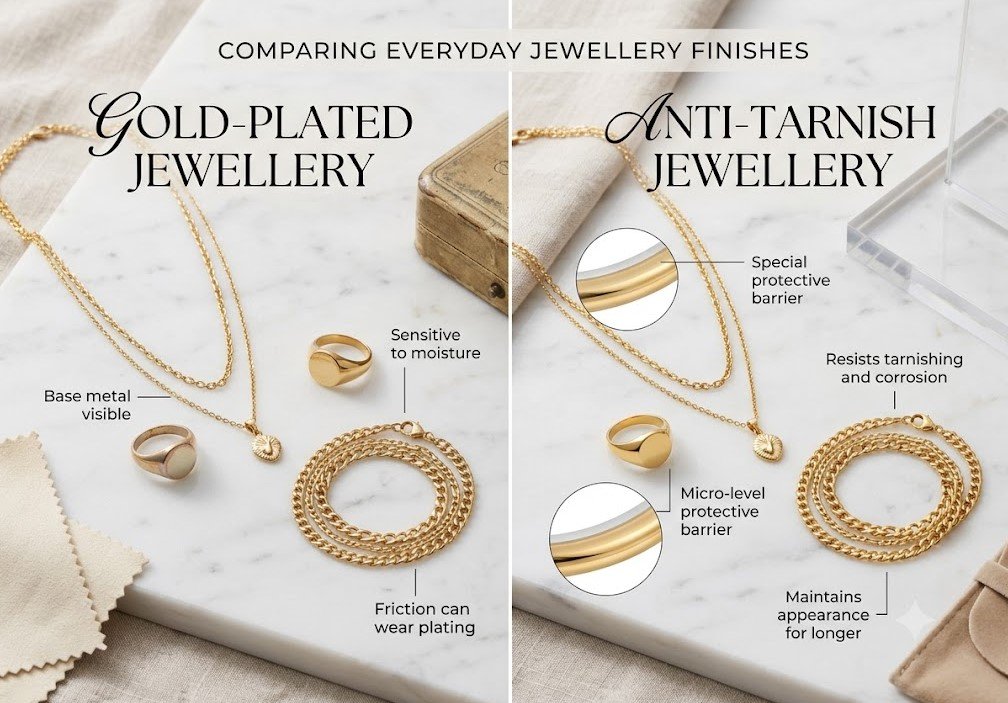
Gold-plated jewellery is made by applying a thin layer of gold over a base metal, such as brass, copper, or another suitable material. It offers the appearance of gold jewellery at a generally more affordable price.
Gold-plated jewellery is available in many designs, including necklaces, chains, earrings, rings, and bracelets. It is a popular choice for people who enjoy the look of gold without purchasing solid gold pieces.
Benefits of Gold-Plated Jewellery
- Affordable style: It usually costs less than solid gold jewellery.
- Beautiful appearance: It offers a gold-like finish that complements different outfits.
- Variety of designs: It is available in modern, traditional, and minimal styles.
- Easy styling: Gold-plated pieces can be worn for casual outings, parties, and special occasions.
However, the gold layer can gradually wear away because of friction, moisture, perfumes, and frequent use. Its durability depends on the plating thickness, base metal, and care.
What Is Anti-Tarnish Jewellery?
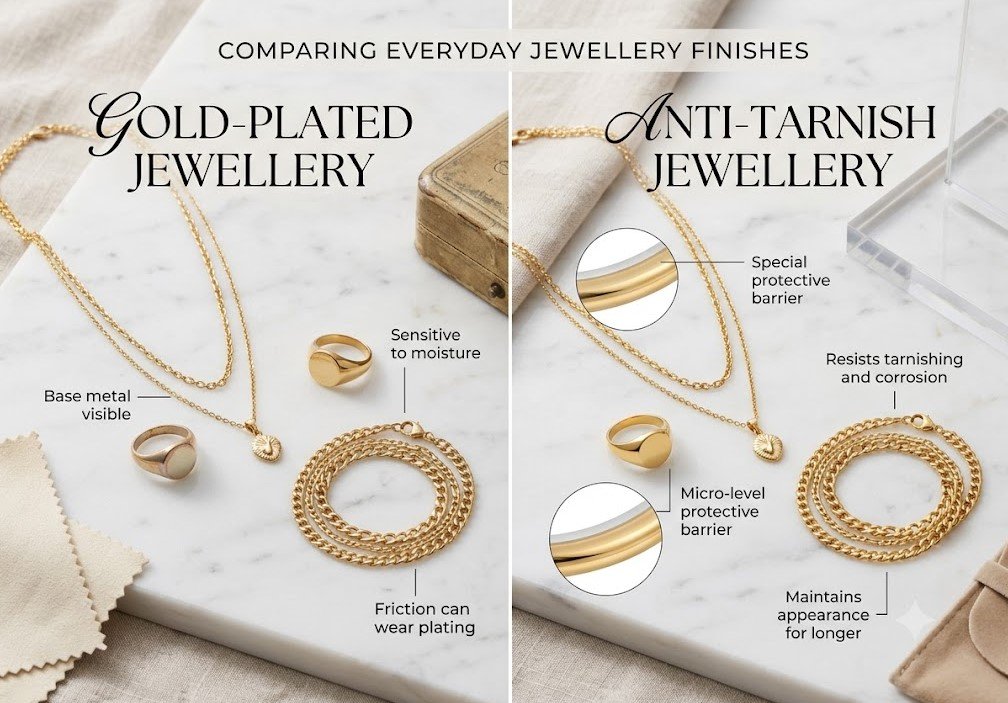
Anti-tarnish jewellery is jewellery designed or treated to help resist tarnishing and maintain its appearance for longer. Depending on the product, this may involve protective coatings, suitable materials, or other tarnish-resistant treatments.
Anti-tarnish jewellery is available in different finishes and styles. You can find necklaces, earrings, rings, bracelets, and chains to match your personal style.
Benefits of Anti-Tarnish Jewellery
- Helps resist tarnishing: The material or protective finish can slow tarnish formation.
- Suitable for different occasions: Many designs work well for everyday outfits and special events.
- Available in multiple styles: Choose from minimal, layered, modern, and statement jewellery.
- Easy to maintain: Basic cleaning and proper storage can help preserve its appearance.
Remember that anti-tarnish jewellery is not completely tarnish-proof. Its performance depends on its materials, coating, manufacturing quality, and how you care for it.
Gold-Plated vs Anti-Tarnish Jewellery: Key Differences
The main difference is that gold-plated describes a type of finish, while anti-tarnish describes a property or treatment intended to help resist tarnishing.
1. Material and Finish
Gold-plated jewellery has a layer of gold over a base material. Anti-tarnish jewellery may use different base metals and finishes designed to reduce tarnishing.
Some jewellery can be both gold-plated and anti-tarnish treated. Always check the product description to understand its actual material and finish.
2. Appearance
Gold-plated jewellery offers a gold-coloured finish. Anti-tarnish jewellery may be gold-toned, silver-toned, or available in other finishes, depending on the product.
Choose the finish that best matches your wardrobe and personal preferences.
3. Durability
The durability of gold-plated jewellery depends on factors such as gold-layer thickness, base material, and daily use. Anti-tarnish jewellery may resist tarnishing, but its finish can still wear down or become damaged.
Neither type is guaranteed to last forever without maintenance.
4. Price
Both types are available at different price points. Gold-plated jewellery prices vary according to the base metal, gold content, plating quality, and design. Anti-tarnish jewellery prices depend on its materials, finish, and craftsmanship.
Compare product specifications rather than choosing based on the label alone.
5. Care and Maintenance
Both types benefit from gentle care. Keep jewellery away from perfumes, lotions, harsh chemicals, and unnecessary moisture. Wipe pieces with a soft, dry cloth after wearing them and store them in a dry place.
Which Jewellery Is Better for Everyday Wear?
The best choice depends on your needs and the product’s quality.
Choose gold-plated jewellery if you love a gold finish and want affordable designs for your everyday outfits or special occasions.
Choose anti-tarnish jewellery if your priority is a finish or material designed to resist tarnishing. Check the product details to understand how the jewellery is treated and what care it requires.
If you want both a gold appearance and tarnish resistance, look for gold-plated jewellery that specifically states it has an anti-tarnish treatment. Verify the material and care instructions before purchasing.
How to Make Your Jewellery Last Longer
Whether you choose gold-plated or anti-tarnish jewellery, good care can help maintain its appearance.
- Avoid chemicals: Apply perfume and lotion before putting on your jewellery.
- Remove jewellery before bathing: Water, soap, and shampoo may affect certain finishes.
- Wipe after use: Use a soft, dry cloth to remove sweat and residue.
- Store carefully: Keep each piece in a separate pouch or jewellery compartment.
- Avoid rough handling: Prevent scratches, bending, and unnecessary friction.
- Follow product instructions: Use only cleaning methods recommended for your jewellery’s material.
These habits can help protect the finish and keep your favourite accessories looking beautiful.
Explore Anti-Tarnish Jewellery at ALORA
At ALORA, you can explore jewellery styles designed to complement your personal look. From minimal necklaces and layered chains to elegant earrings, rings, and bracelets, choose pieces that suit your wardrobe and the occasions you enjoy.
Before buying, review the product description, material information, finish, and care instructions so you can make an informed choice.
Explore our ALORA jewellery collection to discover styles for everyday wear and special occasions.
Frequently Asked Questions
Is gold-plated jewellery the same as anti-tarnish jewellery?
No. Gold-plated describes a layer of gold applied to a base metal, while anti-tarnish refers to materials or treatments intended to help resist tarnishing. A product can have both features.
Does gold-plated jewellery tarnish?
Gold-plated jewellery can lose its finish or show changes over time, particularly when the gold layer wears away or the base metal reacts with its environment.
Does anti-tarnish jewellery last forever?
No. Anti-tarnish jewellery can still experience wear, scratches, or changes in appearance. Its lifespan depends on quality, materials, usage, and care.
Can I wear anti-tarnish jewellery every day?
Many pieces are suitable for everyday wear, but it is best to follow the manufacturer’s care instructions and remove jewellery before swimming, showering, or exercising.
Which is better: gold-plated or anti-tarnish jewellery?
Neither is always better. Choose according to the finish you prefer, the product’s materials, your budget, and how much maintenance you are comfortable with.
Conclusion
The difference between gold-plated vs anti-tarnish jewellery comes down to the finish and its intended resistance to tarnishing. Gold-plated jewellery provides a gold-like appearance, while anti-tarnish jewellery is designed or treated to help maintain its appearance for longer.
Some products offer both features. By checking product details, choosing quality designs, and following proper care practices, you can find jewellery that fits your style and needs
Learning how to clean anti-tarnish jewellery starts with choosing the right cleaning method. For most delicate pieces, gently wipe the surface with a soft, dry microfibre cloth. This helps remove dust, fingerprints, and everyday residue without unnecessary rubbing.
Before using water or a cleaning solution, check the manufacturer’s instructions. Some jewellery has protective coatings or decorative stones that require special care.
Avoid toothpaste, abrasive brushes, vinegar, and harsh chemicals because they may damage the finish.
Final Jewellery Care Tiphttps://pixabay.com/images/search/jewelry/?utm_source=chatgpt.com
Regular, gentle cleaning is better than aggressive scrubbing. Choose suitable cleaning methods for your jewellery’s specific material, and avoid soaking pieces unless the manufacturer confirms it is safe.
gold-plated vs anti-tarnish jewellery
gold-plated vs anti-tarnish jewellery
gold-plated vs anti-tarnish jewellery
gold-plated vs anti-tarnish jewellery
gold-plated vs anti-tarnish jewellery
gold-plated vs anti-tarnish jewellery
gold-plated vs anti-tarnish jewellery
gold-plated vs anti-tarnish jewellery
gold-plated vs anti-tarnish jewellery
Gold-Plated vs Anti-Tarnish Jewellery: Amazing Differences Explained
Jewellery adds beauty and elegance to every outfit. Whether you prefer necklaces, earrings, rings, or bracelets, choosing the right jewellery can help you express your personal style. When shopping online, you may often see gold-plated jewellery and anti-tarnish jewellery. But what is the difference between them?
Understanding gold-plated vs anti-tarnish jewellery can help you choose accessories that match your style, budget, and everyday needs. In this guide, we will explain their key differences, benefits, durability, and care tips.
What Is Gold-Plated Jewellery?
Gold-plated jewellery is made by applying a thin layer of gold over another metal, such as brass or copper. It provides the appearance of gold jewellery at a generally lower price than solid gold.
Gold-plated jewellery is available in many designs, including layered necklaces, elegant earrings, rings, and bracelets. It is a popular choice for people who enjoy a gold finish without buying solid gold jewellery.
- Affordable appearance: Enjoy a gold-like finish at a lower price than solid gold.
- Variety of designs: Find modern, traditional, minimal, and statement styles.
- Easy to style: Gold-plated jewellery can complement casual outfits, office wear, and party dresses.
- Suitable for gifting: It offers many attractive options for birthdays and special occasions.
However, the gold layer can wear away over time because of friction, moisture, chemicals, and frequent use. Its durability depends on the quality and thickness of the plating and how the piece is maintained.
What Is Anti-Tarnish Jewellery?
Anti-tarnish jewellery is jewellery made with materials or treatments designed to help resist tarnishing and maintain its appearance for longer. Depending on the product, this may involve protective coatings or tarnish-resistant materials.
Anti-tarnish jewellery comes in different finishes, including gold-toned and silver-toned designs. You can find necklaces, chains, rings, earrings, and bracelets for everyday wear and special occasions.
Benefits of Anti-Tarnish Jewellery
- Helps resist tarnishing: Suitable materials or protective finishes can slow tarnish formation.
- Versatile styles: Choose from simple, layered, elegant, and statement designs.
- Easy everyday styling: Many pieces can complement different outfits.
- Simple maintenance: Gentle cleaning and proper storage can help preserve their appearance.
Keep in mind that anti-tarnish jewellery is not completely tarnish-proof. Its performance depends on the material, coating, quality, and care routine.
The biggest difference is that gold-plated describes a finish, whereas anti-tarnish describes a property or treatment intended to help resist tarnishing. Some jewellery products can have both features.
1. Material and Finish
Gold-plated jewellery has a layer of gold applied over a base metal. Anti-tarnish jewellery may use different metals and protective treatments to reduce tarnishing.
Always read the product description to understand the actual materials and finish.
2. Appearance and Style
Gold-plated jewellery provides a gold finish that can look elegant with traditional and modern outfits. Anti-tarnish jewellery is available in different colours and finishes, depending on its design.
Choose the appearance that best matches your personal style.
3. Durability
Gold-plated jewellery can lose its gold finish as the plating wears away. Anti-tarnish jewellery may resist tarnishing, but its coating can still become scratched or damaged.
The lifespan of either type depends on product quality, frequency of use, and maintenance.
4. Price
Both types are available at different prices. Gold-plated jewellery costs depend on plating quality, base metal, design, and craftsmanship. Anti-tarnish jewellery prices depend on its materials, finish, and manufacturing quality.
Compare product details rather than relying only on the label.
5. Care and Maintenance
Both types benefit from gentle care. Keep them away from harsh chemicals, perfume, lotions, and unnecessary moisture. Wipe them with a soft, dry cloth after wearing and store them in a dry place.
Which Is Better for Everyday Wear?
The best choice depends on what you need from your jewellery.
Choose gold-plated jewellery if you prefer a gold appearance and want stylish accessories at an affordable price.
Choose anti-tarnish jewellery if your priority is a product designed or treated to help resist tarnishing. Check its material details and care instructions before purchasing.
If you want both a gold finish and tarnish resistance, look for gold-plated jewellery that specifically states it has an anti-tarnish treatment. Not every gold-plated product has this feature.
How to Make Your Jewellery Last Longer
Whether you choose gold-plated or anti-tarnish jewellery, proper care can help maintain its appearance.
- Avoid direct contact with chemicals: Apply perfume and lotion before putting on your jewellery.
- Remove jewellery before bathing: Water, soap, and shampoo may affect certain finishes.
- Wipe after wearing: Use a soft cloth to remove sweat and residue.
- Store pieces separately: Use a dry pouch or jewellery box to help prevent scratches.
- Avoid rough cleaning: Do not use abrasive brushes or harsh household cleaners.
- Follow care instructions: Use cleaning methods recommended for your specific jewellery.
These habits can help protect your favourite pieces and preserve their finish.
Explore Stylish Jewellery at ALORA
At ALORA, you can explore jewellery styles designed to complement your personal look. From minimal necklaces and layered chains to elegant earrings, rings, and bracelets, there are styles for different outfits and occasions.
Before purchasing, review each product’s material, finish, and care instructions so you can choose jewellery that suits your needs.
Explore our ALORA jewellery collection to find designs for everyday wear and special occasions.
Frequently Asked Questions
Is gold-plated jewellery the same as anti-tarnish jewellery?
No. Gold-plated describes a layer of gold applied to a base metal, while anti-tarnish refers to materials or treatments designed to help resist tarnishing. A product can have both features.
Does gold-plated jewellery tarnish?
Gold-plated jewellery can lose its finish over time, especially when the gold layer wears away. Exposure to moisture, chemicals, and friction can speed up deterioration.
Does anti-tarnish jewellery last forever?
No. Anti-tarnish jewellery can still experience scratches, coating wear, and changes in appearance. Its lifespan depends on the materials, quality, use, and care.
Can I wear anti-tarnish jewellery every day?
Many pieces are suitable for everyday wear. However, remove jewellery before swimming, showering, or exercising unless the manufacturer states otherwise.
Which is better:
Neither is always better. Your choice depends on your preferred finish, budget, product quality, and maintenance needs.
Conclusion
Understanding gold-plated vs anti-tarnish jewellery makes it easier to choose accessories that suit your style and budget. Gold-plated jewellery offers a gold finish, while anti-tarnish jewellery is designed or treated to help resist tarnishing. Some products offer both features.
Choose quality pieces, read product descriptions carefully, and follow proper care practices to help your jewellery remain beautiful for longer. Explore ALORA to find jewellery styles that complement your everyday look.